Mar 25, 2012

Massachusetts Dance Festival 2012

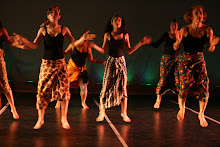
(Contrapose Dance)


Another kaleidoscope of activities from the Massachusetts dance community ensues June 23rd and 24th at Boston University Dance Theatre, 915 Commonwealth Avenue, Boston, MA 02215, showcasing two full days of open adult dance classes, Saturday night professional dance companies and Sunday afternoon emerging dance companies. A total of 12 different performances have captivated audiences in past years (beginning in 2009). Massachusetts Dance Festival (http://www.massdancefestival.org) will then visit UMass Amherst's Bowker Auditorium, Amherst, MA 01003, on September 22nd and 23rd, with large attendance expected from UMass Amherst's students, faculty, and staff, as well as the larger community. Tickets are $25 for Sat nite shows, $15 for Sun afternoon shows, with d/c for BDA, seniors, and students. All advance orders placed online are discounted $5.00. We hope that you will help us celebrate dance across the Commonwealth


Massachusetts Dance Festival believes that dance, as a major component of arts and culture, is essential to meaningful lives and healthy communities.
Dance and arts education contribute to quality life in the 21st Century by providing rich education for youth and promoting cultural understanding and tolerance, within diverse communities.
MDF offers annual statewide education workshops and performances that are inclusive of all dance genres. Our festivals provide opportunities for professional and emergent dancers and choreographers, while inspiring community-wide involvement.
MDF seeks to raise the profile of dance as a profession in Massachusetts, as a means to stimulate social and cultural development across our state.

Jul 3, 2011

Massachusetts Dance Festivals 2011


Massachusetts Dance Festival kicks off its second year of full day weekend education workshops and performances on August 13th and 14th at Boston University's Dance StudioTheater and August 27th and 28th at UMass Amherst’s Bowker Auditorium and Totman Gymnasium Theater, capturing audiences east to west. (http://www.massdancefestival.org)

A non-profit organization formed in 2008 by dedicated Massachusetts dance professionals and activists, MDF strives to “successfully establish dance artistically, financially and operationally, throughout the state,” while simultaneously “providing a rich education for youth (that) promotes cultural understanding and tolerance.”

MDF stands apart from the wide assortment of other dance festivals by actually paying dance performers and educators, who have professionally studied and performed locally, nationally, and internationally, with heralded persons and institutions such as: Agnes deMille, Alvin Ailey, Anna Sokolow, Boston Ballet, Brenda Bufalino, Chet Walker, Leonide Massine, Jimmy Locust, Josh Hilberman, Jacobs Pillow, Matt Mattox, National Ballet Senegal, and Stuttgart Ballet, among others.

Invigorating the performance art genre called “dance” is no easy task, yet this two-pronged approach that reaches hundreds of dance enthusiasts from all geographic locations, ethnic and cultural diversities, and complementary levels of dance ability – from absolute beginners to full-fledged professional company members – has proved a successful platform. Businesses, educational, cultural, travel, and arts institutions, as well as dance industry vendors, students, and audiences, have joined the cause.

This year’s performance line up for both days evenly distributes outstanding works from Massachusetts-based modern, ballet, jazz, hip-hop and world dance companies, for the widest audience viewing pleasure. Here are some highlights:

* Agbekor Drum and Dance Society (ADDS), founded in 1979 by David Locke, Ph.D., performs Ewe and Dagomba West African repertory – reenacting songs, drumming languages, and dances as authentically created – while investigating “new inter-cultural spaces” that honor “African mind/body discipline” and the integration of American music and dance culture. Authentic instruments played “live” produce “specific rhythms that repeat over and over, with the lead drum sending musical signals that cue dancers when to do their different variations … each item of repertory with its unique purpose, meaning, history, and performance personality.” (http://www.agbekorsociety.org)

* BoSoma Dance, founded by Irada Djelassi and Katherine Hooper in 2003, stretches every boundary of human physicality and musicality, through high intensity, paradoxical twists, turns, leaps, and rapid spatial changes that thrill audiences, consistently. “BoSoma Dance Company was founded upon the belief that dance should be an accessible art form, transcending borders of social background and cultures; it collaborates with local musicians and visual artists with the intent of reaching out to audiences of different artistic mediums.” (http://www.bosoma.org/bosoma)

* Boston Dance Company, a Cambridge-based non-profit organization founded in 1992 by James Reardon and Clyde Nantais, both exemplary dancers and master educators from the Boston Ballet and Boston Conservatory, trains young dancers in “classical balllets, Balanchine ballets, reconstructed historic works, 20th century masterpieces, and new works by emerging local choreographers specifically commissioned for BDC.” BDC also produces full-length annual Nutcracker performances and family-orientedSpring productions (http://www.bostondancecompany.net).

* Chaos Theory Dance, founded by Billbob Brown in 1999, derives its name “from the science of complexity, which finds meaningful patterns in apparently unpredictable systems, such as weather, clouds, traffic, and social groups … finding balance between highly ordered movement, and moments that go as wildly out of control as possible.” Cosmically and personally embracing, CTD “delights audiences with stunning lifts and belly-slapping laughs … warming hearts and inspiring souls … (through) movement that borrows from all genres - modern dance to jazz, tap, ballroom, and boxing!” (http://www.chaostheorydance.com),

* Contrapose Dance, founded by artistic director Courtney Peix, creates exciting and entertaining works that “engage audiences by plumbing deep emotions,” inviting them to “set aside expectations and respond to the thrill of the new.” Contrapose Dance, with roots in classical training, combines traditional with contemporary, bringing a “new energy to the theater scene, attracting a new generation of dance lovers." Contrapose seeks not only to reach existing dance audiences but also to widen the circle by reaching out to communities that may never have attended dance concerts. (www.contraposedance.com)

* Fran & Miriale Dance Fusion is a new performance and education duet with roots in Venezuelan folk, Afro-Cuban, Flamenco, ballroom, jazz, and funk, that provides a refreshing (if not sizzling) fusion style that teens, young adults, and all ages are instantaneously drawn to. High energy hip, rib, and shoulder undulations, contracted torso complemented by precision turns, dips, and fast footwork incites movement in the body and spirit of any onlooker or participant.

* Impact Dance Company, founded by Meghan McCaffrey, is one of Boston’s youngest contemporary based dance companies, with all of its performers under the age of 27. IMPACT seeks to “give a voice to our generation and those younger than us who feel like no one has ever understood them or their feelings…to let them know they are not alone.” IMPACT “initiates change by bringing dance to the forefront and raising awareness…by magnifying what is not stereotypically accepted or touched upon as frequently as it should be,” by providing realistic and poignant portrayals through high energy animated and pedestrian movement, music, and the spoken word. (http://www.facebook.com/impactdanceboston?sk=wall&filter=2)

* Lorainne Chapman The Company (LCTC) “challenges dancers and audiences both kinetically and emotionally. Through her dynamic movement and compelling theatricality she is able to blend together even the most incongruous ingredients.” “Providing passionate, engaging, and satisfying theatrical performances LCTC connects the energy and synergy from dancers to audiences in significant, yet unexpected ways.” Her keen sense of musicality and theatrics drives her challenging 2011 production. (http://lorrainechapman.org/index.html)

* Legacy Dance Company, founded by Thelma Goldberg, a well-known and highly regarded tap dancer and master educator, is the youth performance division of Dance Inn, performing tap, jazz, hip-hop, contemporary and musical theater repertoire that delights audiences young and old. Establishing the Dance Inn in Lexington in 1983, Thelma’s mission is “to offer the highest level training and programming for both the recreational and aspiring professional dancer,” always emphasizing good technique and musicality, and “dance as a life-long activity.” (http://www.thedanceinn.com/performance.html)

* Navarassa Dance Theater, founded by Aparna Sindhoor, Ph.D., in 1991, creates “solo and group works in classical and contemporary dance and theater that are Inspired by Indian classical and folk dance forms, theater, world music, martial arts (kalari ppayattu), aerial dance, yoga, live singing and storytelling.” Navarassa is a “dynamic, radical, and original style of dance theater, known for its shows with themes that deal with human issues in a meaningful way that makes audiences enjoy and be touched at the same time.” (http://www.navarasa.org)

* Triveni Dance Ensemble, founded by Neena Gulati, Master dancer and teacher of classical Bharat Natyam in Massachusetts since 1971, focuses on the “preservation and presentation of ancient temple dances and their educational stories, using a highly formalized choreography which combines hand gestures, facial expressions, rhythmic footwork and sculptured body postures.” Bharat Natyam, considered a ‘fire dance,’ combines “Expression” (BHA), “Raga” or “Music” (RA) and “Tala” or “Rhythm” (TA) in the exquisite elocution of gestures, movements and poses, while wearing brightly colored sarees, ankle bells, and temple or “performance jewelry,” creating a mystic aura for dancers and audiences, alike. (http://www.trivenidance.org)

Also performing are the heralded Audra Carabetta Dancers, Jazz Inc., Quicksilver, SkooJCorE-O, Prometheus, Sokolow Now!, Susan Seidman and Seidman Says Dance, and Upsana – not to be missed performances by master technicians, creators, and performers from all corners of Massachusetts.

To date, MDF is sustainable through performance and dance class ticket sales, and the dedicated hours of our board members and valued volunteers. We thank ALL of our dancers, teachers, and supportive institutions and audiences for helping us to promote dance and healthy communities across the Commonwealth, and invite you to partake in our 2011 festivities.

Please visit: (http://www.massdancefestival.org) for ticketing, dance class schedules, and performance company lineup.

Feb 13, 2011

Black Swan: Ballet Bomb

http://en.wikipedia.org/wiki/Black_swan_theory

“Black Swan,” written by Mark Heyman and Andres Heinz, directed by Darren Aronofsky, could easily be categorized as a psychological thriller or high quality horror film, which barely touches elements of artistic reality for the genre of dance called ballet. It provides an entertaining, emotionally laden, and dark drama that is riveting and engaging in its use of special effects and haunting music, but does not factually interpret a 21st Century ballerina’s state of ‘being.’

When the movie opens, we get a glimpse of Nina Sayers’ (played by Natalie Portman) psychological instability, as she whispers to her audience the frightful “spell” that must be “broken” by her magical prince, in order that she will not “kill herself.” Already a foreshadowing of events to come, this scene portrays Nina a fearful, obsessed, neurotic who later confesses to “wanting to be perfect,” but is too frail (mostly mentally and emotionally) to pull off this feat.

Nobody, not even her artistic director, Thomas Leroy (played by Vincent Cassel), believed that ‘being perfect’ was a necessary ingredient for dancing the dual role of Odette and Odile, as choreographed for the classical ballet “Swan Lake” (in 1895) by Marius Petipa and Lev Ivanov, in St. Petersburg, Russia.

While the challenging Odette/Odile role is marked, historically, by the highest levels of technical performance (for example Odile executing 32 fouette turns en pointe in her Pas de Deux, as part of her seduction to lure the prince), under no circumstance have any of the swans danced themselves to death in over 200 years of Swan Lake’s staging.

Nor have noteworthy dancers fallen, dizzy from spinning lights, as occurred in Aronofsky’s version. Not only did Pierina Legnani (1895) set the barre at 32 fouette turns, she introduced the basic concept of “spotting,” so that she wouldn’t get dizzy (and fall from her partner’s lift, like Nina did) during long bouts of pirouettes.

The fact that Natalie Portman always looks stiff, or at the very best uncomfortable, no matter what movement she attempts, further adds to the disbelief of her character – as a professional dancer seeking perfection but appearing frenzied, unfocused, insecure, downright frightened, and deliriously obsessed with herself.

And while it seems Aronofsky’s attempt to portray the profession of ballet as one marred by obsessive, obscene, narcissistic, immature, director-dependent, anorectic girls that cannot “let go” to express their sexuality (adequately?), most professional dancers are not driven by their art into a desperate state of madness. Quite contrarily, any dancer who has the requisite physical and technical skill to accomplish the Odette/Odile duality, must also possess the necessary emotional maturity and psychological stability to pull it off.

No artistic director on earth would ever stage a dancer who was as paranoid and psychotic as Nina Sayers. Nor would he attempt to kiss her, or blatantly accost any dancer of the company, as Thomas did with Lily (played by Mila Kunis), Nina’s back-up and (psychological) rival.

Thomas’ insistence that Nina was “not relaxed enough,” with needs to “go home and touch herself,” is absurd. So is his inappropriate summation of what he deems her frigidity to a colleague, and his blatant questioning: “Would you F**K this woman?” to drive home his point. In 21st Century America, he would simply be strung up and dried out – his career incinerated, lawsuits abounding.

Last, but not least, is Erica Sayers’ (played by Barbara Hershey) apparent attempts to protect her daughter, by controlling her bedtime, her bedfellows (mainly fluffy bunnies, puppies, and bear-bears – oh, and one tightly wound music box), and Nina’s self inflicted wounds – all the while feeding her sugar-laden cake – against Nina’s feeble wimpering.

Meanwhile, Nina, living in New York City, daily enters a metropolis teaming with the vagaries and vulgarities of real city life, unable (even IF by choice) to ignore the 21st Century world around her. It is not believable that such an estranged character could exist within that environment, split between leading the life of a pre-adolescent – the age defying only child of a working, single mother – and that of a beautiful, physically-centered adult dancer, bursting with hormones.

My toes really curl when Nina follows the manipulations of Lily for a night of drugging and drinking. This event truly shatters any hope for realism, as NO professional dancer would EVER partake in this type of behavior 12 hours or less before opening night; at least not one dancing Odette/Odile in Swan Lake.

Finally, the fact that Nina is hallucinating throughout the movie, cannot herself determine reality, and clearly does not encompass the necessary elements of her craft or of her “being,” would severe her lead role in any professional company. And the final event of Nina stabbing herself (during Act One, are you serious?????) and eventually dying (two hours later – in Act Two???) from the shattered mirror is preposterous beyond the very wildest imagination.

While I truly enjoyed the special effects (feathers growing out of her skin, toes melted together, legs crumpling like puppets’, the black swan wings sprung up from her bodice), this movie should have posted a disclaimer in the opening credits: “Under NO Circumstances do the Events in this Movie Represent Real People or the Profession of Ballet.” In this way, the mothers of dancers and children who witnessed it would discontinue asking me questions like: “Do your feet really mold together when you wear pointe shoes?” and potential ballet goers wouldn’t be put off by such deleterious commentary of ballet.

While I do appreciate Natalie Portman’s ardent, though brief, study of ballet and her attempt to embody basic ballet movements, I still hold bias against any attempts to distort the truth about who is doing the dancing. For instance, the entire corps de ballet had their heads digitally lopped off and displaced with actress (prettier?) heads, and many movie goers still believe it was Natalie performing high level footwork, turns, balances, lifts, and port de bras – those that require decades of study, and not just one year.

Black Swan is an oversimplification and subjective slander of the art form that began in kings’ courts in Italy and France, and progressed (during the Classical Period when Swan Lake was created) to one of the most highly codified and complex art forms in the world. However, as a vehicle for psychological thrill or outlet for horror entertainment, I think it should be rated A Plus.
Feb 12, 2011

Agbekor Drum & Dance Society Performs with Natraj World Music Group


World-jazz ensemble "Natraj" joins folkloric "Agbekor Drum and Dance Society," featuring W African master dancer/drummer Nani Agbeli, in energized music-making at Ryles Jazz Club, 212 Hampshire St., Inman Square, Cambridge, MA 02139. Tickets are $12. Validated parking available. All ages welcome. Call 617-876-9330 or visit: http://www.ryles.com .

A native of the Ewe from the Volta Region of Ghana, master drummer
Nani Kwashi Agbeli has thrilled audiences from Africa to the US and Jamaica with his exuberant, folkloric music. He has been a guest artist at institutions such as University of Legon, Ghana; Edna Manley School, Jamaica; Berklee College; Tufts University; and University of Virginia.

The West-African folkloric Agbekor Society showcases David Locke’s virtuosic drumming. Natraj-Agbekor collaborations feature highly charged contemporary adaptations of traditional Ghanaian music.

“By now, the convergence of West Africa and Northern India in jazz is a natural... Leave it to Natraj to put it all together in a singular world-jazz conception... Some of the finest players in town,” declares the Boston Phoenix.

Natraj:
Phil Scarff - soprano saxophone
Rohan Gregory - violin and viola
John Funkhouser - string bass
Jerry Leake - tabla, multipercussion
Bertram Lehmann - drums, percussion
http://www.myspace.com/natrajfusion

Agbekor Society:
Nani Agbeli, Featured Guest Artist
David Locke, Founder and Artistic Director
Doug Berman, Faith Conant, Anthony Douglass, Ian Gendreau, Leigh Kelter, Jerry Leake, Lisa Leake, Tom Macdonald, Ben Paulding, Warren Senders, Vijaya Sundaram, Alicia Stevenson, Michael Traub
http://www.agbekorsociety.org

http://www.musicdancepromo.com/events.html

Feb 1, 2011

Last Dance of "Mama Fatou" N'Diaye

Saturday evening, January 8, 2011, marked the final performance of “Mama” Fatou N’Diaye and the company she founded in 1981, “Silimbo D’Adeane,” at least with her as its full-time artistic director in the City of Cambridge. As master dancer, choreographer, and cultural arts educator for over 30 years in African and the U.S., she returns to her roots in Senegal this week to continue her work in a warmer climate.

Having begun her professional career at age 17 in her native Adeane, Senegal, Fatou N’Diaye rose quickly to stardom, performing in the Daniel Sorano National Theatre of Dakar, “National Ballet of Senegal,” traveling with the president of Senegal on official visits to countries – including China, later in popular television productions, with special appearance in “L’lle de Diama,” (Michael Douglas), and as a featured role in WGBH-TV Basic Black (documentary on dance’s healing power in cultures around the world). (http://www.silimbo.com).

Moving to the U.S. in 1991, she toured most major cities with “Silimbo,” then organized

La Adiyana Bamtamba Courocoto, West African Dance and Drum Conference, 1996. She received grants from the NEA and D.C. Commission on the Arts and Humanities, supporting her art in the Washington locale. Mama Fatou has taught in Boston, Cambridge public schools, at Harvard University, the French Library, and countless community and arts centers throughout Massachusetts and the entire country.

Her mission, as mentor and dance historian, is to bring all levels of dancers to the stage, helping to spread the culture and craft of her Senegalese dance, drumming, and songs pan-nationally, through workshops, conferences, weekly classes and company rehearsals, so that the folklore and traditions of Senegal, in their original forms, can be shared.

Passionate to the core, she instills the love of her rich heritage, enabling each of us through understanding of Senegal’s rituals, ceremonies, and daily living events. Learning through her is easy because she tells the story behind the dance, ensuring that we understand the meaning behind the movements, the drumming, and songs sung in her native language.

From a personal perspective, as one of her students and company members of “Silimbo,” I must point out that Mama Fatou is much larger than any of her accomplishments. With her wide, inviting smile, penetrating eyes – perceptive, wise, and compassionate, her polished skin – inviting and warm, and deep, honey-toned voice, we are reassured from the moment Mama steps into the dance studio.

Her appearance is one of respect and awe, always composed, professional, direct, intuitive and able to pull diverse ages and backgrounds together. Like mother earth, her wholesome, centered-ness, like the Feng Shui “nourishment,” provides solidarity and a foundation for all living elements and beings, of which there can be no harmony or life in its absence (http://www.fengshuicrazy.com).

Or like the proton – positively charged, subatomic particle – which resides in the nucleus of the atom – the basic unit of all matter, she is stable, indivisible, “uncuttable” – attracting and bounding the other particles through an unseen electromagnetic force (http://www.wikipedia.org).

Fatou N’Diaye-Davis speaks the universal language and art form called “Love.” She embraces arts for humanity, fellowship, inclusion, and wields an undying resolve to spread the word of dance from the Diaspora to people everywhere. Her enchantment with life, people, and performing arts is contagious, bounding free from any barriers that the unenlightened should attempt to orchestrate.

Her leaving is all but unbelievable, and its reality has surely not resounded at the deepest level. I cannot speak of life and dancing without her without exuding an enormity of gratitude and emotion. All’s I can really do is wait in joyful contemplation of our next meeting.

With MUCH LOVE and GRATITUDE to Mama Fatou N’Diaye-Davis.

Please visit her here: http://www.facebook.com/profile.php?id=100000745554956

Dec 27, 2010

12 Dancers Dancing: A Christmas in Cambridge (2010)


12 Dancers Dancing- A Christmas in Cambridge (2010)

Eclectic weekend dance performances at the Dance Complex in Cambridge, MA, portrayed the diversity of talent and culture that is embedded in lifestyle, here, during the 21st Century. The Dance Complex itself, formed in 1991, in order to secure the historic Odd Fellows Hall as a means to “promote, advance, sponsor, facilitate, and nurture creative and artistic work,” is a creation born of democratic, intellectual, and aesthetic ideals. A physical locality coupled with a visionary mindset where “securing a community of artists is a higher priority than establishing an organizational bureaucracy,” the Dance Complex is the perfect venue for producer Honey Blonder to promote mixed genres of hip hop, ballet, modern, jazz, disco, street funk, belly dancing, step, gymnastics, and an all-male cast of full contact, jazz-funk dancers dressed in Santa Claus hats.

Rainbow Tribe, Kelley Donovan, B Side, Contemporarily Out of Order,Disco Brats, Derrick Davis, Brookline Academy of Dance, Deepa Srinath, Bright Pearl Dance Company, Johara and Jim Banta, and Legacy Dance Company, marked the line-up for two evenings chock-full of synchronized, soulful, innovative and interesting choreographies. Some of the most memorable contrasts included:

Men dancing in sneakers, while executing 180 degree dips and flawless turns (Rainbow Tribe); perfect spirals, arabesque layouts and Graham contractions (Brookline Academy); Egyptian costuming and shimmies (Johara and Jim Banta); the effortlessly flowing hands, “petite winged arms,” and repetitive circles (conducted with bowl on the side of her angled head) by (Bright Pearl Dance Troupe); spectacular sparkling outfits, hot pants, and disco white boots (with taps), and full body lifts (Legacy Dance); the all-maleness of Bside; and amazing modern physical feats by Samantha Wilson and Laurel Reveley (Kelley Donovan and Dancers).

These were, of course, in accordance with inherent nature of all tensions associated with the art of dance and of the Christmas holidays, punctuated by a stilling, maybe even disquieting performance by singer Steffani Bennet of “winter Song, written by Sara Bareilles and Ingrid Michaelson, and “Have Yourself a Merry Little Christmas,” written by Hugh Martin and Ralph Blane. Her beautiful yet haunting voice reminded me of our human frailties and imbalances, in the face of a holiday marked by rejuvenation, reconciliation, and renewal of spirit.

Similarly, the opening 30 minutes was characterized by Alissa Johnson, a frozen white ballerina (stockings, leotard, skirt), accented by silver bands on her thin arms, a silver Tiara, and lone silver ball held lethargically in both hands, while she sat motionless on a box, her feet not properly crossed in the “fifth position” perfect mode. No breath or heart rhythms could be detected. Shadows cast from one bright light behind her right shoulder only intensified the ambiguousness of her being – at once childlike and innocent – evoking the holiness, peace and spirit of the season – while simultaneously detached and disassociated from any body or (seemingly) any emotion.

Quieted in that moment, I couldn’t help feel the tightening in my temples, the crinkling of my brow, and the slow squeezing of warm tears out of my eyes’ corners, as memories of those loved and lost blurred my vision of that unmovable, meditative figure that resolved into the contemplations of my mind. In acknowledgment of the emotional, spiritual, and aesthetic pleasures of the season and the night to come, I thanked God for the opportunity to celebrate a personal and collective humanness with an audience from Cambridge, Massachusetts, and 12 Dancers Dancing. Hats off to Honey Blonder for a job very well done.

http://www.examiner.com/dance-in-boston/12-dancers-dancing-a-christmas-cambridge-2010

Nov 27, 2010

REBECCA PARRIS Workshop @ Hingham "Indie Connect" Mtg

Monday, December 6th 2010 @ South Shore Music Conservatory, Hingham (1 Conservatory Drive, 02043)

From 6:00 pm to 8:00 pm

Cost: $20.00 includes Rebecca Parris’ Presentation on Jazz Singing 2010

PLUS Healthful & Holiday Snacks and Drinks

http://www.sscmusic.org/contact_us.html

Rebecca Parris was born in Newton, Massachusetts into a family of educators and musicians. Her early career is marked by studies with world-class vocal coach, Blair MacClosky, and attendance at Boston Conservatory. At first she toured with top 40’s bands, then became immersed in the American jazz genre of singing, developing her distinctive version of improvisation, scat, exemplary phrasing, and masterful story telling.

Parris has performed worldwide with great jazz legends, including Dizzy Gillespie, Buddy Rich, Wynton Marsalis, Gary Burton, Count Basie, Woody Herman, David “Fathead” Newman, and many others. Rebecca has performed at the heralded Monterey Jazz Festival, North Sea Jazz Festival, Oslo Jazz Festival, and the too-cool International Floating Jazz Festival.

Rebecca’s latest release is You Don’t Know Me on the Saying It With Jazz label. Rebecca performs some well-chosen standards with her long-time trio: Brad Hatfield, piano; Peter Kontrimas, bass; and Matt Gordy, drums. Rebecca’s previous releases include My Foolish Heart, The Secret of Christmas, A Beautiful Friendship, Double Rainbow, A Passionate Fling, Love Comes and Goes, and Live at Chan’s. (http://www.rebeccaparris.com)

Additional to her notoriety as a world-class jazz singer, Rebecca is a private vocal coach widely in demand by artists across the state. She has reached and taught thousands of eager audiences, and continues to exemplify American jazz singing across the globe.

THIS WORKSHOP IS THE FIRST IN A SERIES for the nation’s fastest growing network of independent artists: “INDIE CONNECT” (http://indieconnect.ing.com)

CONTACT: Lisa Leake,

Boston Indie Connect Chapter Presiden

http://indieconnect.com/chapters/boston

RSVP: (781) 608-6084; onpointbusiness@comcast.net

boston@indieconnect.com

“Indie Connect:” Where The Music Industry Meets! (http://indieconnect.com

Aug 15, 2010

Rebecca Parris opens Mass Dance Festivals


Rebecca Parris was born on December 28, 1951 in Newton, Massachusetts into a family of educators and musicians. Her early career is marked by studies with world-class vocal coach, Blair MacClosky, and attendance at Boston Conservatory. At first she toured with top 40’s bands, then became immersed in the American jazz genre of singing, developing her distinctive version of improvisation, scat, exemplary phrasing, and masterful story telling.

Parris has performed worldwide with great jazz legends, including Dizzy Gillespie, Buddy Rich, Wynton arsalis, Gary Burton, Count Basie, Woody Herman, Terry Gibbs, David “Fathead” Newman, Norman Simmons. Harold Jones, Andy Simpkins, Gerry Wiggins, Bill Cunliffe, Red Mitchell, Buster Cooper, Nat Pierce, and many others. Rebecca has performed at the legendary Monterey Jazz Festival in '90 & '95, North Sea Jazz Festival, Oslo Jazz Festival and of course the ever-so-hip International Floating Jazz Festival, and continues to exemplify American jazz singing across the globe.

Rebecca's latest release is You Don't Know Me on the Saying It With Jazz label. Rebecca performs some well-chosen standards with her long-time trio: Brad Hatfield, piano; Peter Kontrimas, bass; and Matt Gordy, drums. Rebecca's previous releases include her all-ballads CD, My Foolish Heart, The Secret of Christmas, A Beautiful Friendship, with the Kenny Hadley Big Band, Double Rainbow with Eddie Higgins and Michael Monaghan, A Passionate Fling, Love Comes and Goes, and Live at Chan's. (go to: http://www.rebeccaparris.com)

Additional to performing, Rebecca is a noteworthy vocal teacher, widely in demand, from students near and far, that don’t mind traveling to benefit from her instruction. She is also a community activist who has led benefit concerts for numerous charities and causes, is an ardent supporter of “Save School Music,” and a recent advocate of the “Massachusetts Dance Festival.”

Rebecca Parris will be opening for two weekends of dance festivals during the first statewide MDF events, beginning on Saturday August 21st @ 8:00 pm, at the Boston Ballet top floor performance venue, and the following Saturday, August 28th, and the Fine Arts Center in Amherst. She will perform a few of her favorite jazz songs, then turn the stage over to 11 professional dance companies for the evening.

Having just attended another spectacular performance by Rebecca last night, I can vouch that our regional icon and “First Lady of Jazz” from Massachusetts, is fully engaging in her playful, serious, sensuous way, that pulls you into an astounding musical experience.

Ticket prices for August 21st and 28th are $25.00 at the door, $20.00 in advance. Go to: http://www.massdancefestival.org/tickets.html to order in advance.

Jul 6, 2010

Massachusetts Dance Festival 2010 statewide events


Massachusetts Dance Festival’s first annual statewide events, sponsored by the UMass Amherst Department of Music and Dance, will be held August 21st and 22nd at Boston Ballet, 19 Clarendon Street, Boston, and August 28th and 29th, at UMass Amherst (Totman Building) and The Fine Arts Center, Amherst. 2010 events at both sites include Saturday evening performances by eleven professional dance companies, and Sunday late afternoon performances by eleven emerging dance companies, representing genres of ballet, jazz, modern, contemporary, aerial, multimedia, East Indian, and hip hop/jazz. Each presentation reveals the sheer creative power of dance – the breadth of training and talent across the Commonwealth – of physicality, technical excellence, emotional exuberance, and compelling artistry, that is certain to attract and engage audiences of all ages and backgrounds.

Innovative choreographies of two weekends include: 1) “Marionette,” which questions the notion of “success,” reflecting the “struggle to get ahead in business, financial, and personal lives…driven by relentless social images,” choreographed by Katherine Hooper of BoSoma Dance Company, where athleticism and the “constant energy of phrasing” propels dancers ahead three steps, and back only two; 2) A dramatic selection by Contrapose Dance entitled “Sanitas,” which approaches society’s “recent obsession with cleanliness and staying free of sickness,” plummeting deeply into the human psyche … gripping audiences while challenging dancers through feats of athletic and artistic elocution; 3) Monkeyhouse dancers’ newest creation, “Against the Odds,” which “explores themes of endangerment and stagnancy,” and the enormous effort required to get “unstuck,” using a series of ‘found sound’ recordings of rain and train station buskers; 4) A multi-media celebration of the Connecticut River by Sorvino Dance Project called “Downstream,” where fluid movements are adapted to the power, stillness, and interruptions of the river, against a backdrop of Sam Pettengill’s visual artwork, and a magnetic improvisational and polyrhythmic musical landscape; 5) An energetic and uplifting piece, Mariah Steele’s “Simon & Garfunkel Suite,” which portrays a “desire to celebrate life and the human experience in all its grit and humor, dust and glory… a love of community, awe of our bodies’ vast capabilities … and a deep faith in humanity.”

Additional to dance performances are 40 classes of dance instruction for adults and children in Boston, August 21st and 22nd, between the hours of 11:00 am and 5:00 pm on Saturday, and between 11:00 am and 3:00 pm on Sunday. Adult and student classes in Amherst on August 28th and 29th begin at 11:00 am and end at 5:00 pm on Saturday, and begin at 11:00 am and end at 3:00 pm on Sunday, culminating in 20 classes over the weekend. That’s a total of 60 dance classes taught by Massachusetts master dancers and teachers, K-12 educators, and industry specialists, covering genres of ballet, jazz, tap, modern, contemporary, African, Cuban Salsa, hip hop, inclusive dance for physically disabled dancers, and a diverse range of innovative children’s dance classes. Specialty workshops on dance photography, managing a successful cultural business, and healthy dancers will also run adjacent to movement classes, offering a full spectrum of activities for all ages and levels of audience participants.

MDF’s Emcee for both Saturday nights is Massachusett’s native and national jazz icon, Rebecca Parris, who will open both performances and sing two of her favorite, popular jazz standards. She is an ardent supporter of music and dance performance and education in Massachusetts, and a tireless promoter of the Massachusetts Dance Festival’s mission:

“… to revitalize dance and arts-related professions by developing partnerships with businesses, corporations, institutions and communities. Massachusetts Dance Festival believes that dance, as a major component of arts and culture, is essential to meaningful lives and healthy communities. Dance and arts education contribute to quality life in the 21st Century by providing rich education for youth and promoting cultural understanding and tolerance within diverse communities.”

MDF is a registered 501(C) 3 non-profit, with its 2010 summer dance festival supported by: Body Grooves, Boston Dance Alliance, Dancing Arts Center, the Dance Inn, Hot Stepz Magazine, North Shore Dance Alliance, Red Fez Restaurant, and Teddy Shoes. Senator Sonia Chang Diaz, Chair of the Tourism, Arts, and Cultural Development Committee, endorses the Massachusetts Dance Festival.

Tickets are $25.00 and can be purchased in advance or at the door. Discounts are available for Boston Dance Alliance Members, students, senior citizens, and groups of 10 or more. Call: (508) 429-7577 for ticket sales information. You may also pay for tickets in advance, through Pay Pal, at the Massachusetts Dance Festival web site http://massdancefestival.org.

For a full listing of performing artists and adult and student dance classes, go to: http://www.massdancefestival.org/performers.html and http://www.massdancefestival.org/schedule.html.

MDF can help to establish Massachusetts as an important destination for arts, culture and tourism.

Apr 24, 2010

Cubist CD Release Concert at Ryles Jazz Club


Lisa Leake
A huge THANK YOU to our friends and colleagues who attended Cubist's CD release concert; the venue was packed, and it was a tremendous success because of you! Here are the first photo's - many more to come. We did not get email addresses for those who are new and want to be on the bandpage, so please, go to:http://www.cubistband.com/guestbook.htm

Apr 21, 2010

Jerry Leake's Cubist, Review by John Garelick

http://thephoenix.com/boston/music/100922-pardon-the-interruption/?page=1#TOPCONTENT

Percussionist Jerry Leake calls it Cubist — which also is the name of his new album (on his own Rhombus Publishing label), and which he celebrates at Ryles this Friday. These concepts take in the continuum of the jazz and ethnic-folklore traditions — not just sequential chronology, but also simultaneity: all traditions existing at once, side by side and on top of one another. To that, Leake would also add the varied perspectives of mathematics involved in his encyclopedic knowledge of world rhythms, and the density one associates with Cubist visual art. The album’s subtitle is Shapes of Sound and Time.

That may all sound daunting, but Cubism is, above all, an album of body-moving grooves. Long a valued sideman in town, Leake is best known for his collaborations with Moroccan-dub jammers Club d’Elf and Indo-Afro-jazz fusionists Natraj. He pinpoints Cubism as being halfway between the loose, trippy jams of the former and the tightly composed formalism of the latter.

With its orchestral scope, crystalline transparency, and melodic focus, Cubism sounds like a band, but most tracks are no more than two or three people: Leake playing layers and layers of varied percussion, he and his wife, Lisa, overdubbing vocals, and Randy Roos — who was also Leake’s production partner — playing a small arsenal of guitars.

As Leake describes it, he made repeated trips to Roos’s home studio on Squam Lake in New Hampshire, loading up whatever percussion he’d need for a particular set of tracks — Indian tablas, African balafon, Indonesian gamelan — and adding a new layer with each visit. In many cases, he would mix the flavors of different traditions. “Na Yella Bo” matches a 12/8 African Dagomba rhythm with a 12-beat alegría flamenco cycle; it’s played with, among other things, gung-gong bass drum, cajón, and handclaps. On “Geo,” he shares credit with one of his mentors, the MIT Indian-music scholar George Ruckert, using one of Ruckert’s ginti rhythmic patterns but bringing in turntablist (and fellow Club d’Elfer) Mister Rourke rather than tablas. Leake also asked fellow New England Conservatory faculty member Ken Schaphorst to orchestrate the jazziest of the tunes here, “Smile.”

One of the players from “Smile,” revered reed-and-flute man Stan Strickland, will be part of the Ryles Cubist line-up, which will also include the Leakes, Roos, keyboardist Steve Hunt, bassist Brad Barrett, and drummer Marty Wirt, with another guest from the album, Noam Sender, on ney and vocals.

Apr 19, 2010

Intercultural Drum/Dance "Rhythm Bootcamp" Summer 2010

Summer Intercultural Institute: World Rhythm Boot Camp

Jerry Leake, Director and Drummer
Lisa Leake, Dancer, Vocalist
Sunday July 18th-Saturday July 24th
Schedule: Saturdays and Sundays 9am-3:30pm
Weeknights 6pm-9pm

In this intensive workshop, rhythm theory and practice merge using a 3-tiered method of reciting African and Indian drum compositions, playing counter stick patterns and applying basic movement to ground one's musical time. Musicians and teachers will find this a useful entry point into African and Indian Cultures. Sticks, CDs and detailed handouts provided at a minimal cost. On the final evening of the workshop, students will participate in an informal public performance with faculty and guests in a festive envoironment of music, dance and food. The classes are demanding, but prior experience with drumming is not expected or required. Participants include college music faculty, K-12 teachers, committed amateurs, professional performers, students of all ages, jazz musicians and composers.

*This institute qualifies for 28 professional development points.

Tuition:

2 SCE Credits: $1050

Early-bird discount SCE credit tuition: $960
(registered and paid in full by June 7)

Non-credit: $685

Early-bird discount non-credit tuition: $595
(registered and paid in full by June 7)

Weekend pass (Saturday & Sunday): $95

All the above require $35 registration fee.

Evening passes (Monday-Friday): $75 per day (maximum: 3) No registration fee

http://necmusic.edu/continuing-education/summer-session/intercultural-institute

Feb 18, 2010

Beginner African Classes

I start teaching beginner African classes at Tartt's Live Well Center, March 16th: http://www.livewellattartts.com

Feb 4, 2010

Belly Synthophone w/Randy Felts, Lisa Leake, Ralph Rosen

I love to dance with Randy, Ralph, Mr. Monzon and others from this talented group; Randy plays Synthophone (midi sax) and wraps art images (and live dancer/musician images) into a full stage visual display: http://www.youtube.com/watch?v=-yFBg3YJOOc

Randy Roos - lengendary guitarist

Come and see this great gig on Friday: http://www.ryles.com/event.cfm?event_id=4520

Jan 28, 2010

To Haiti With Love

To Haiti with Love: A Benefit Concert from Tufts
Sunday, February 14th, 2010
1pm-3pm
Cohen Auditorium
20 Talbot Avenue,
Medford, MA

The Agbekor Drum and Dance Society (ADDS) led by Professor David Locke, is one of the groups performing for this Haiti fundraiser. Tickets are $10.00 for adults and $5.00 for children.